Why you cramp late in a hike, or on the drive home
Tired muscles first, salt and water second. What helps on the trail, at the car and on the drive.
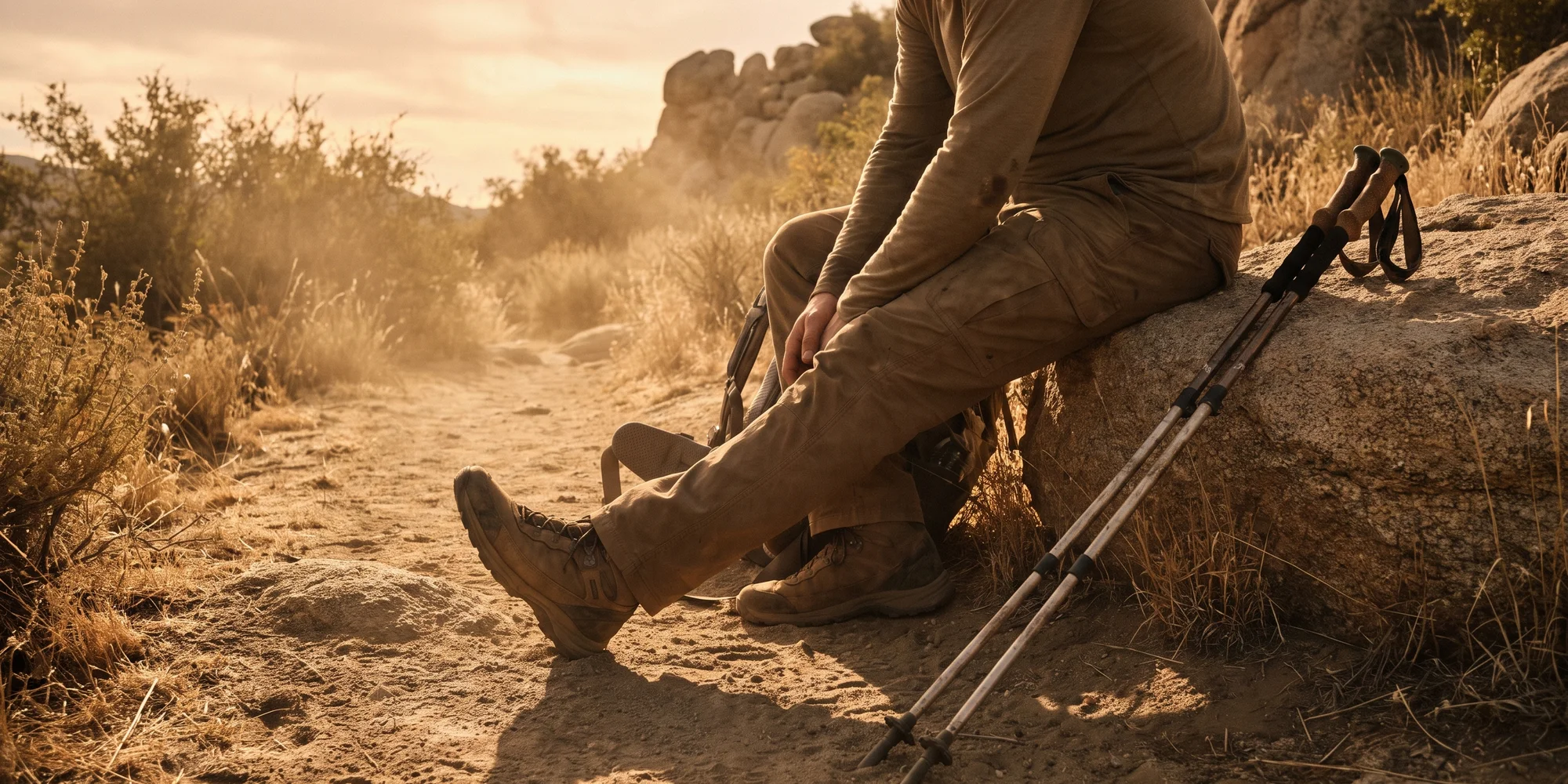
What causes them
Nobody has fully settled what causes exercise cramps. There are two main ideas. One is that a muscle worked close to its limit starts getting mixed signals from the nerves that control it, and locks up. The other is that losing a lot of water and sodium makes nerves and muscles more twitchy. Current thinking leans toward fatigue as the bigger cause, with salt and water mattering for some people more than others.
That fits what most hikers notice. Cramps rarely come in the first hour, when you are fresh but already sweating. They come late, when you are tired.
Why the last third
- Your legs have done the most work by then, and the descent asks for a different kind of work: muscles braking under load, which tires them fast.
- Water and salt losses add up through the day, and the last stage is where most people are furthest behind.
- Eating usually tapers off in the afternoon, so less salt is coming in with food.
- On a hot day, the hottest hours often line up with the last miles.
Why the drive home
After hours of work, you sit down with your knees bent and your calves and hamstrings shortened, and hold that position. The muscles are tired and cooling off. That combination is a common trigger, and it is why a cramp can grab you an hour after the hike, reaching for the brake.
What helps on the trail
- Go easier on the first climb. Pace you spend early costs you late.
- Train for the distance and the descent. Legs used to long downhills cramp less on them.
- Keep eating and drinking across the day, not in a rush at the end.
- If you are a salty sweater, keep up with sodium on hot days. It will not stop every cramp, but being far behind does not help.
- At the first twitch, slow down, shorten your stride, and stretch the muscle gently.
What helps at the car
- Walk around for five minutes before you sit down.
- Stretch your calves, hamstrings and quads, slowly, 30 seconds each.
- Drink some water and eat something salty.
- On a long drive, stop after an hour to get out and stretch.
If a cramp grabs you, stretch the muscle the other way: for a calf, pull your toes toward your shin. Hold it until it lets go. Rubbing it helps too.
Our count puts a Summit Recovery stick in the last stage, with 150 mg of magnesium and 250 mg of sodium, so the finish is not when you are furthest behind on fluid and salt. It is not a cramp cure. Nothing in a stick is.
The full rule, the stage order and the sleeve: how the count works.
Related notes
How much sodium do you need on a long hike?
A working range in milligrams per hour, why your sweat sets the real number, and how to measure it.
Can you have too many electrolytes?
Most short, cool hikes need no stick. The bigger risk is drinking far more than you sweat.