How much sodium do you need on a long hike?
A working range in milligrams per hour, why your sweat sets the real number, and how to measure it.
Why sodium is the one to watch
Sweat is mostly water with salt in it. Of the minerals you lose, sodium is by far the largest share; potassium and magnesium leave in much smaller amounts. Sodium helps your body hold on to the water you drink, which is why plain water alone can feel like it runs straight through you on a long, hot day.
You do not need to replace every milligram as you go. Your body has a buffer, and a meal after the hike refills it. The aim on the trail is to not fall far behind.
How much you lose
Two numbers decide it: how much you sweat, and how salty that sweat is.
- Sweat rate. On a warm climb, many hikers lose somewhere around 0.5 to 1.5 liters an hour. Some lose more than 2 liters in real heat. A cool, flat morning can be well under half a liter.
- Sodium per liter. This varies a lot from person to person, from a few hundred milligrams to well over 1,000 mg in each liter of sweat. It is partly genetic and partly how used to the heat you are.
Multiply the two and the spread is wide. Two people on the same trail can lose very different amounts of sodium in the same hour. That is why a single number on a tub of powder is a guess.
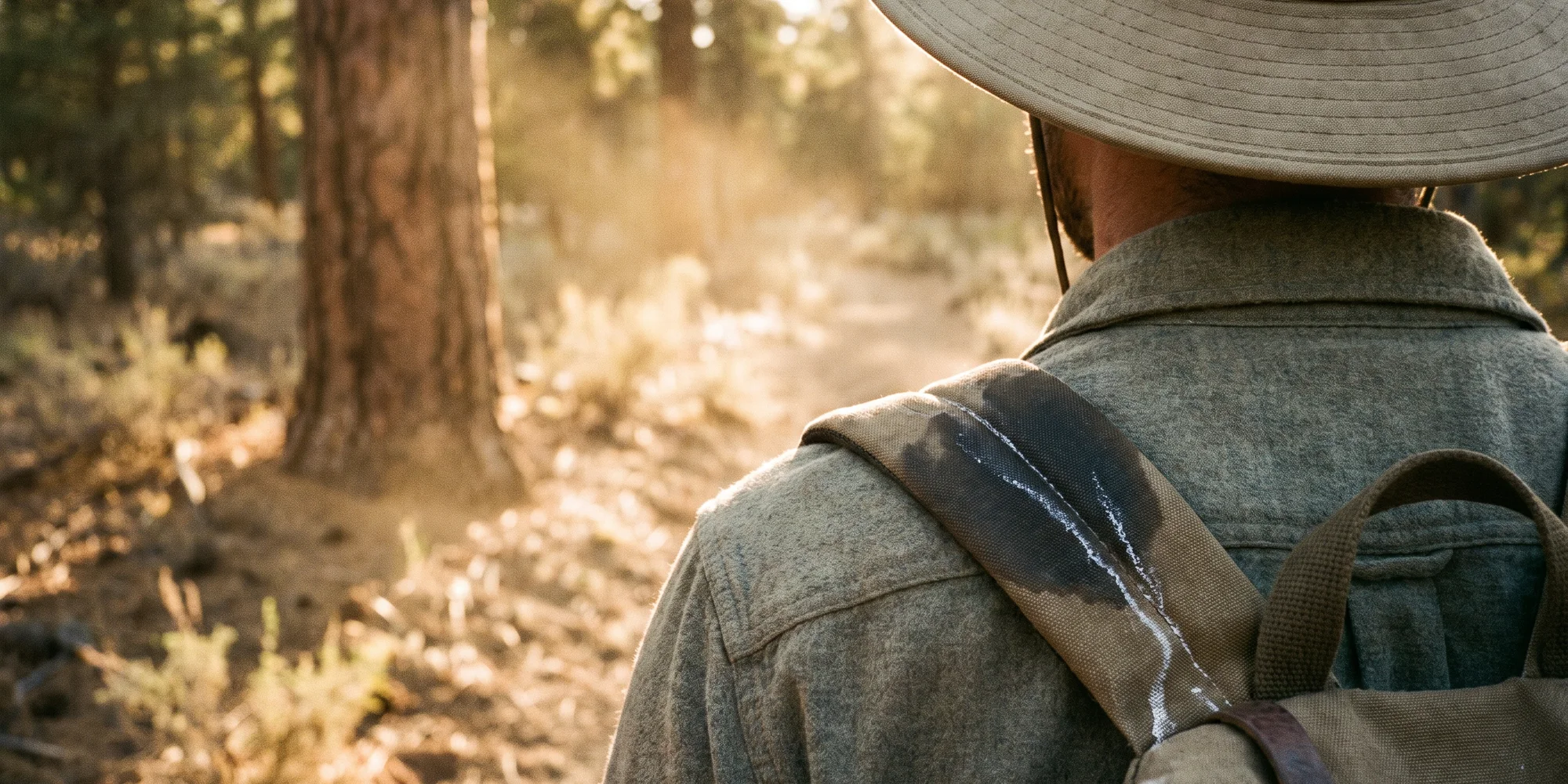
Clues that you are on the salty end: white crust on your hat, shirt or straps, sweat that stings your eyes, and a gritty feel on your face after it dries.
Measure your own sweat rate
You need a bathroom scale and an hour of hiking in the kind of weather you plan for.
- Weigh yourself in light clothes right before you start.
- Hike for an hour at your normal pace. Note how much you drink.
- Towel off and weigh yourself again in the same clothes, before you eat or use the bathroom.
- Each pound you lost is about 16 fl oz of sweat. Add what you drank.
Say you lost 2 lb and drank 16 fl oz. That is 32 + 16 = 48 fl oz, about 1.4 liters of sweat in an hour. Do it once on a cool day and once on a hot one, and you will see how much the weather moves it.
A working range
- Under two hours, cool weather: water and a normal meal before or after are usually enough.
- Two hours or more, or warm: start around 300 to 600 mg an hour, spread across the day, and adjust by how you feel and what your hat looks like.
- Long, hot and salty: some people do better near the top of that range or above it. Build up on training hikes, not on the big day.
Food counts. Salted nuts, pretzels, jerky and a cheese sandwich all carry sodium, and the label tells you how much. A stick in a bottle is one way to carry it; salty food is another.
For scale: a Ridge Salt stick has 500 mg of sodium, a Switchback Citrus has 300 mg, and a Summit Recovery has 250 mg. One stick every hour or two, alongside salty food, lands inside the range above for most people.
Water still does most of the work
Sodium only helps if there is water to go with it. Drink to thirst, sip often instead of gulping at stops, and carry more water than you think on a hot day. Do not force down fluid on a schedule when you are not thirsty; that has its own risk, covered in the guide on having too many.
The full rule, the stage order and the sleeve: how the count works.
Related notes
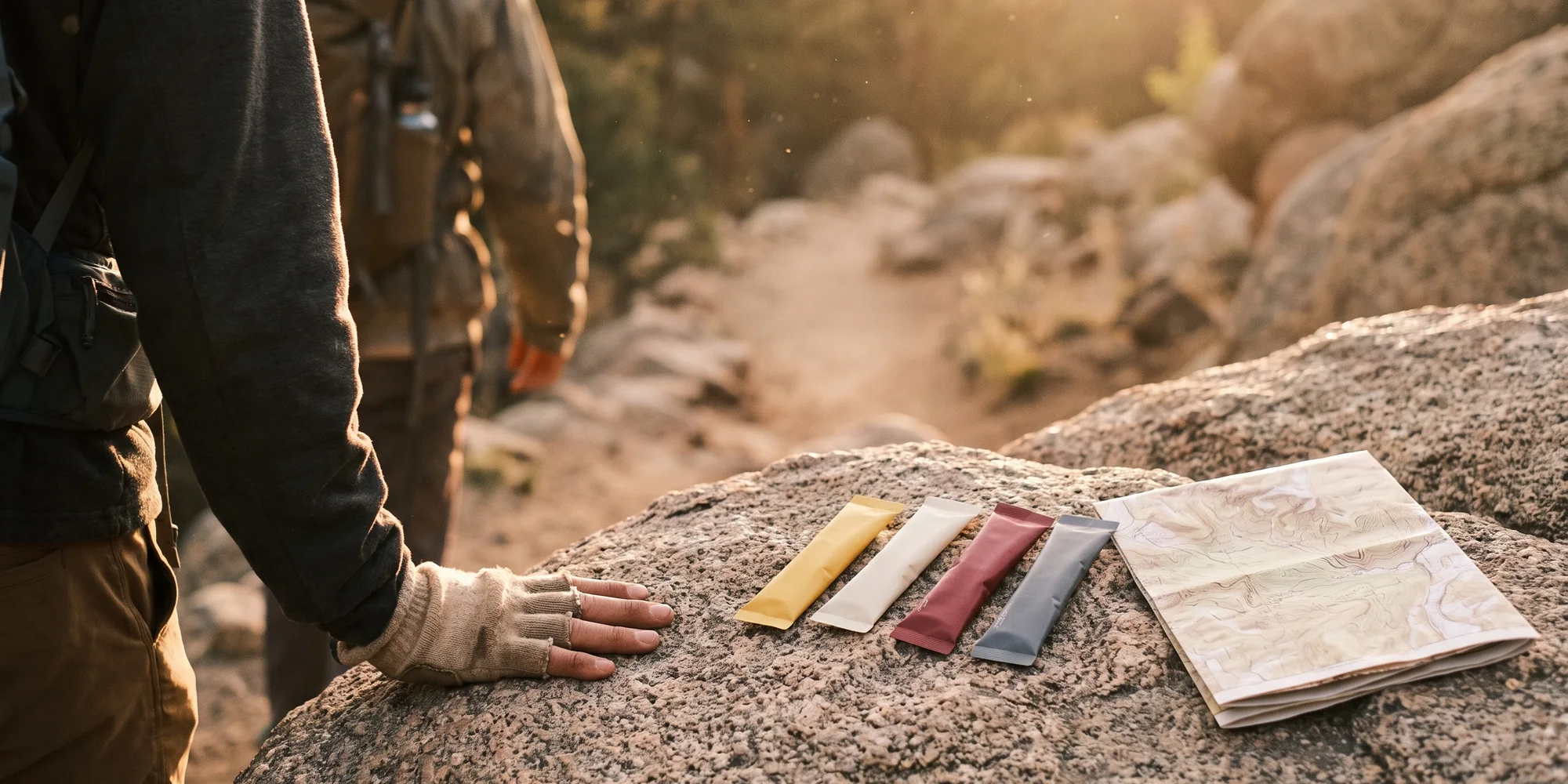
How many electrolyte packets for 10 miles and 3,000 ft?
The count worked through in plain numbers: 3 packets on a cool day, more when it is hot or high.
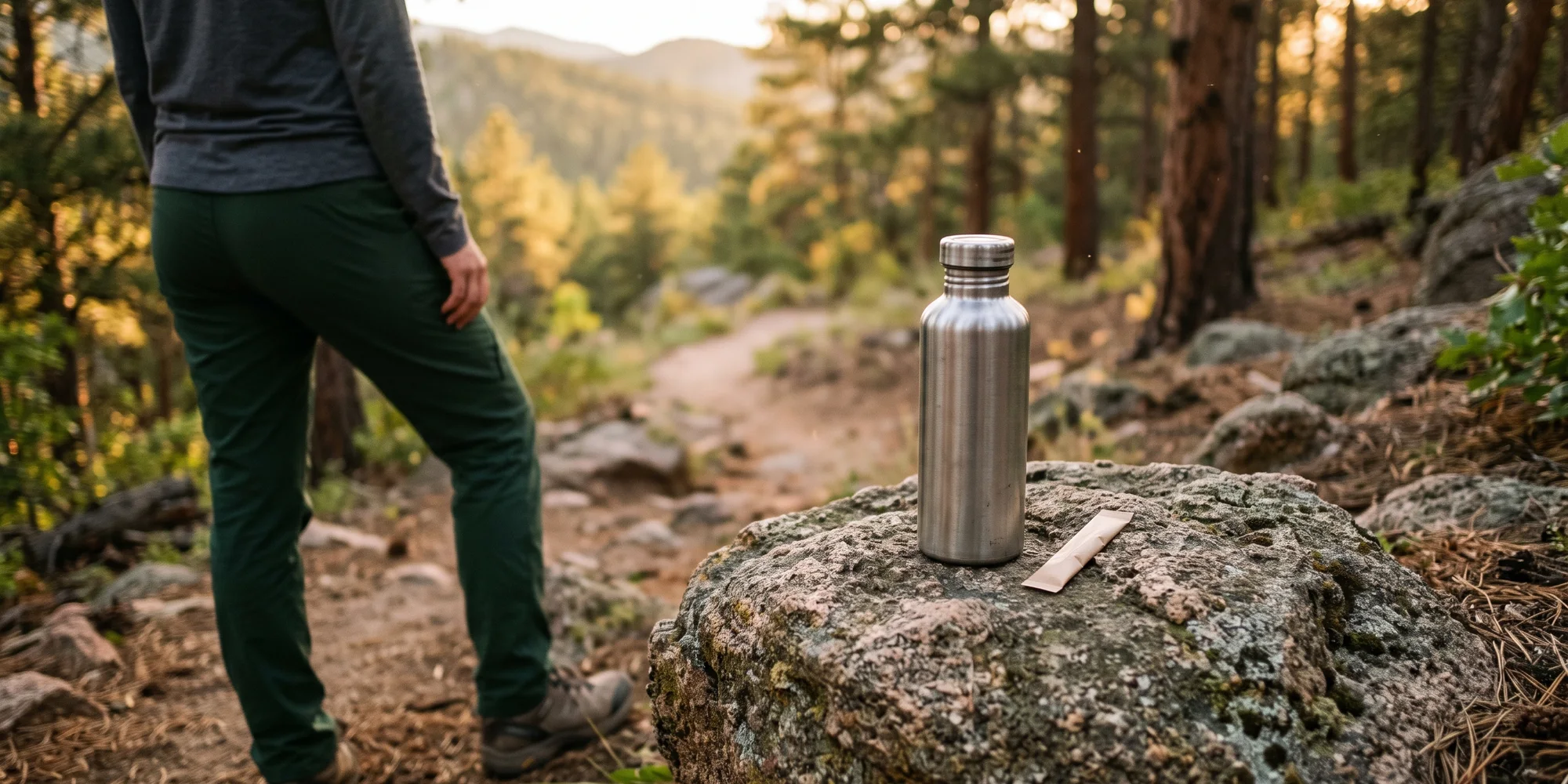
Can you have too many electrolytes?
Most short, cool hikes need no stick. The bigger risk is drinking far more than you sweat.