Do you need more electrolytes in the heat or at altitude?
Heat raises sweat and sodium loss; altitude mostly raises water loss. What to change for each.
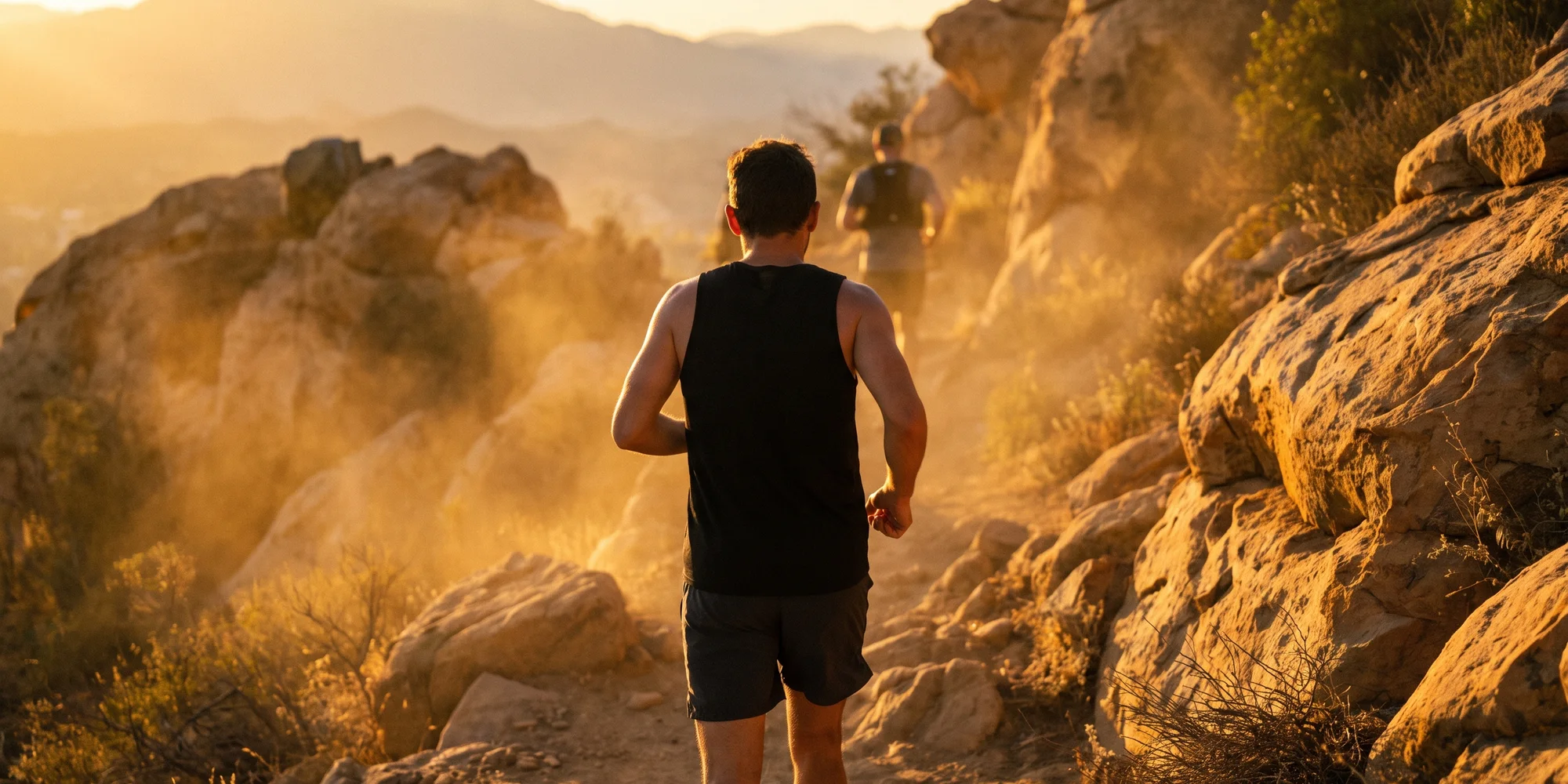
Heat: more sweat, more salt
Your body cools itself by sweating. The hotter it is, the more you sweat to stay at the same temperature, and every liter carries sodium with it. A climb that costs you half a liter an hour at 60 F can cost well over a liter at 90 F, with more sun and less shade.
Humidity makes it worse, because sweat that cannot dry off cools you less. Dry Front Range heat hides how much you lose: the sweat evaporates fast and you feel less wet than you are.
- Start early and plan to be off exposed slopes by late morning.
- Carry more water than on a cool day, and sip it steadily.
- Add salt with it: a stick, salty food, or both.
- Wet your hat or a bandana at streams. Cooling from the outside reduces how much you need to sweat.
Altitude: more water, not always more salt
Up high, the air is colder and drier, and you breathe faster and deeper. Each breath out carries water vapor, so you lose more water than you notice. Many people also pee more for the first day or two at a new altitude. And in cold wind, thirst can lag behind what your body needs.
Sodium is different. You only lose much more of it if you also sweat more. A cool, breezy summit ridge may cost you a lot of water and not much salt. A hot, sunny approach to that ridge costs both.
- Drink on a rhythm you set at the trailhead, since thirst is less reliable up high.
- Watch your urine: pale is fine; dark and scant means drink more.
- Layers hide sweat. If you are working hard under a jacket, you are still losing it.
Our rule, in plain numbers
We do not guess how much your heat or altitude adds. We use three lines: a forecast high over 75 F adds one stick; over 85 F adds a second; a high point over 9,000 ft adds one more. On a 10 mile day with 3,000 ft of gain, that turns 3 sticks at 70 F into 5 at 90 F, and 6 if the summit is at 10,500 ft.
The added sticks are Ridge Salt, the saltiest of the four at 500 mg, because heat is when sodium loss is highest.
These are lines we drew so the count is easy to check, not thresholds from a lab. If you know you are a heavy sweater, add one. If you run cool, you may not need the extra.
What electrolytes will not do
They do not prevent heat illness or altitude sickness. Pace, shade, water, time to adjust to elevation and turning around early do far more. A stick only replaces what you sweat out.
The full rule, the stage order and the sleeve: how the count works.
Related notes
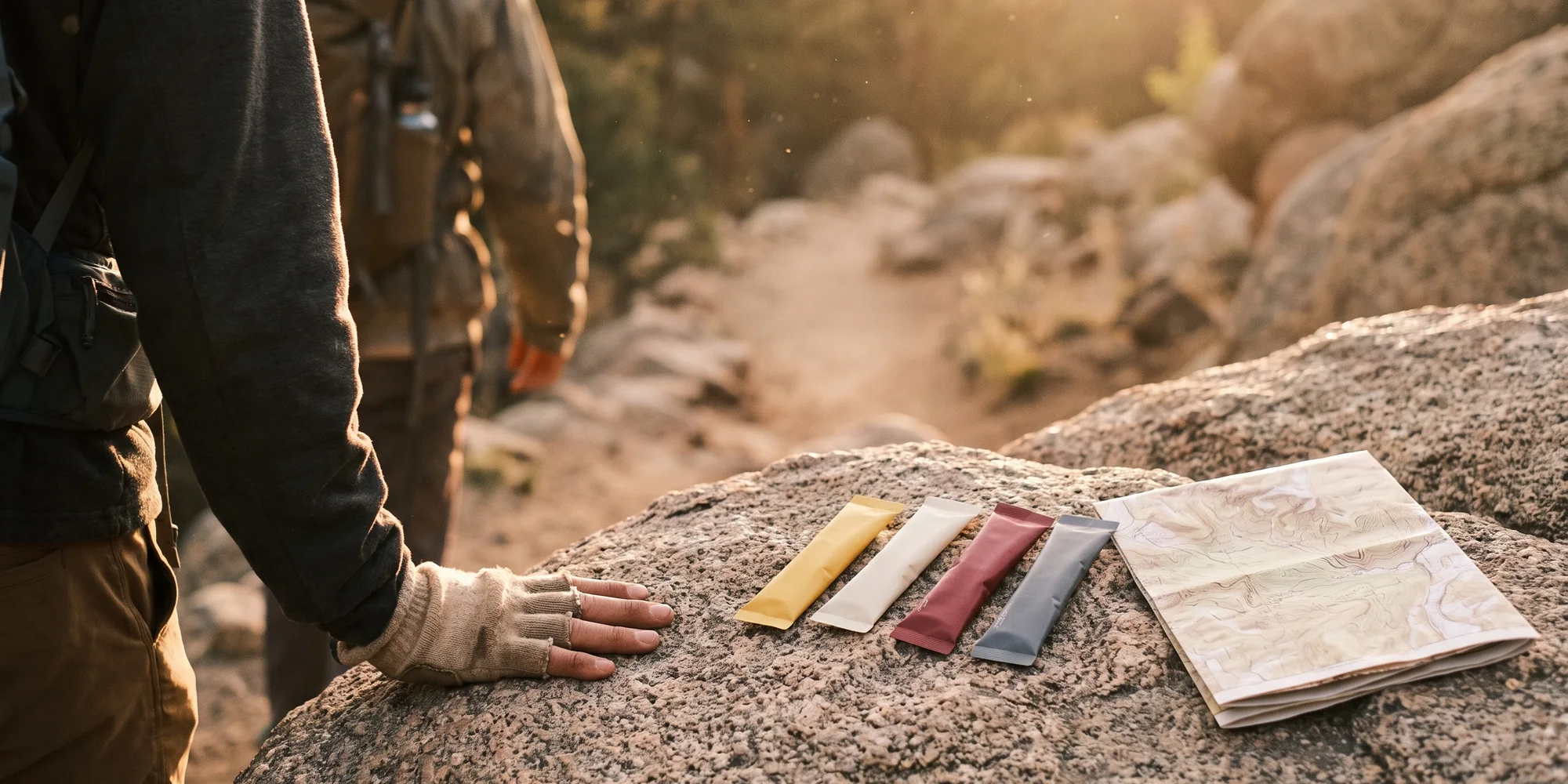
How many electrolyte packets for 10 miles and 3,000 ft?
The count worked through in plain numbers: 3 packets on a cool day, more when it is hot or high.
Why you cramp late in a hike, or on the drive home
Tired muscles first, salt and water second. What helps on the trail, at the car and on the drive.